
Natural History Museum Abu Dhabi
A 13.8-billion-year story told with the flair Saadiyat is famous for — from the Big Bang to 67-million-year-old predators, housed inside a striking rock-inspired landmark.
Tickets
AED 70 adults
Children under 18 free
Opening Hours
Mon–Thu 10 AM – 6:30 PM
Fri–Sun until 8:30 PM
Crowds
Overview
The largest natural history museum in the region, spanning 35,000 square metres, opened in late 2025. It sits between the Louvre Abu Dhabi and the Zayed National Museum in the heart of the Cultural District. The storytelling is anchored in the region — you are not just looking at global history, you are seeing how the Arabian Peninsula evolved from a lush, river-filled savannah into the iconic desert landscape of today.
Stars
Stan the T-Rex & the Murchison Meteorite
Best For
Families, science enthusiasts & photography
Vibe
Sophisticated, awe-inspiring & naturally cool
Duration
2.5 – 3 hours (4 hrs for enthusiasts)
Companion Tips: The Cool Entry
Arrive at 9:45 AM. The doors open at 10:00 AM, and the light hitting the Mecanoo-designed rock façade at that hour is perfect for photos without crowds.
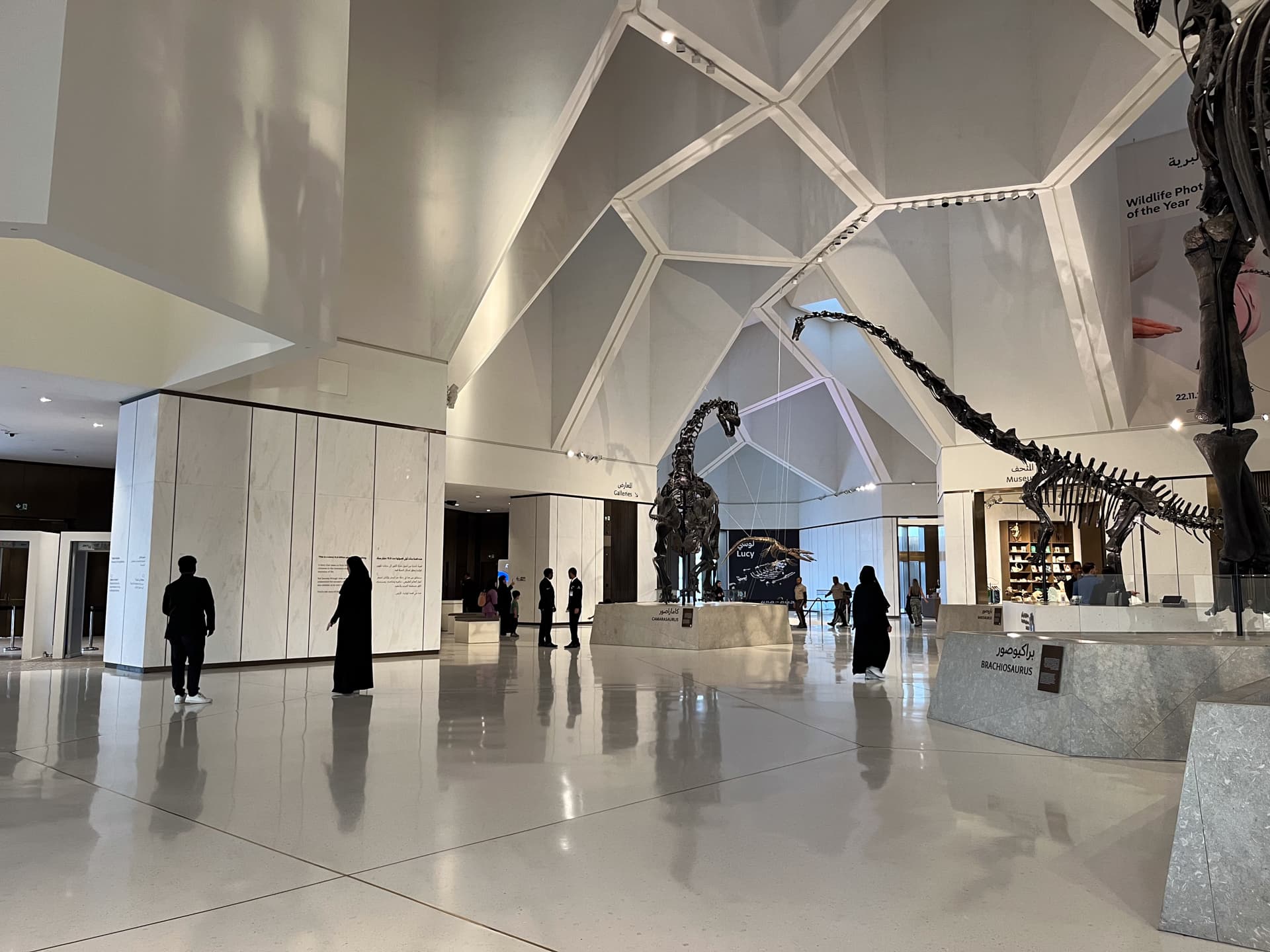
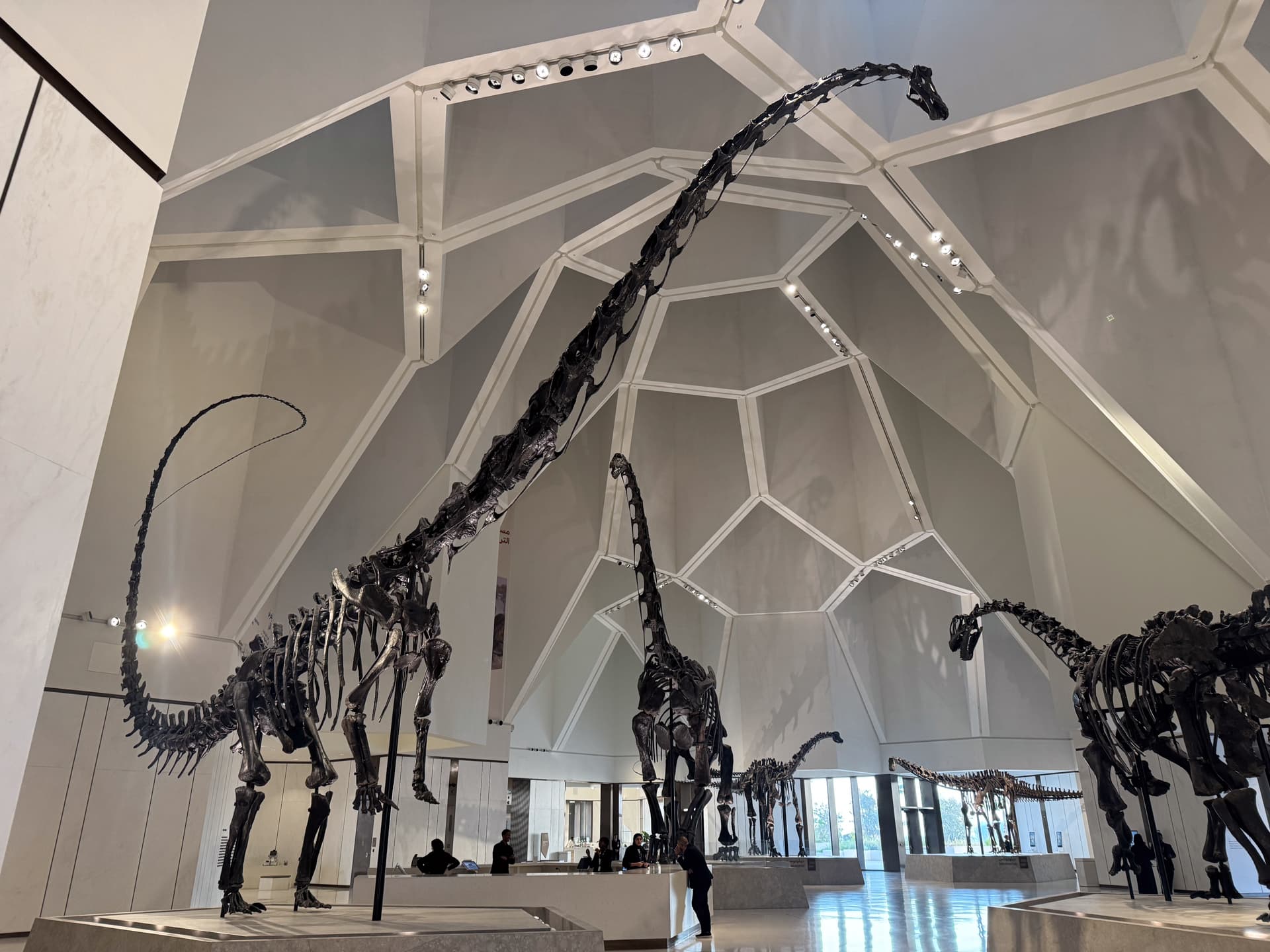
Before the ticket scanners, stop in the central atrium and look up at the five 75-foot-tall sauropods. Walk right between their legs — not the entrance — for the best sense of scale.
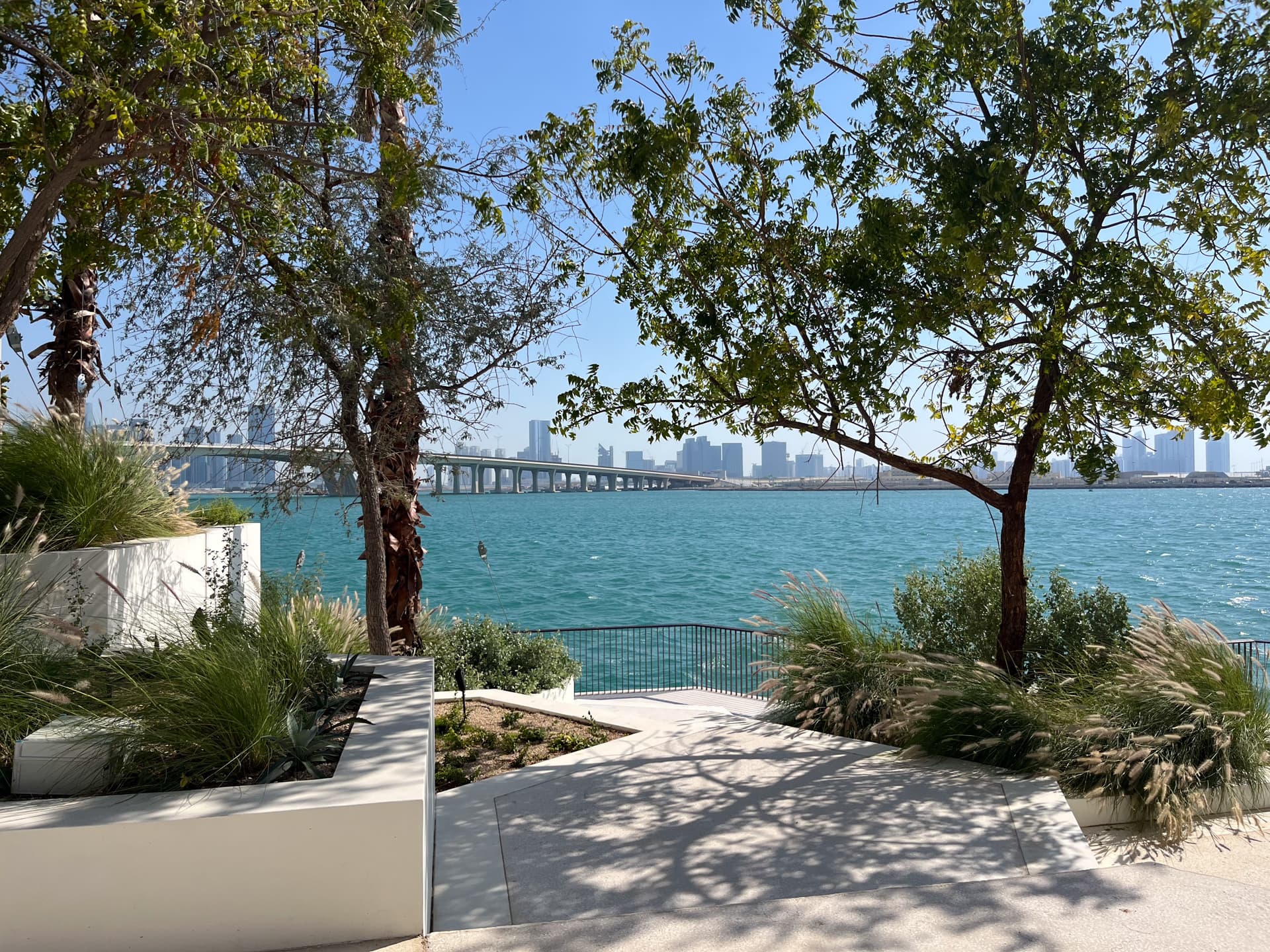
The Wadi Walkway: a 'secret' outdoor garden path connecting the museum to the waterfront. Usually empty and offers a breeze even on warmer days.
Architectural Highlights: The Urban Cave
Designed by Dutch firm Mecanoo, the white-concrete exterior mimics cellular structures, making the building feel as though it grew from the Saadiyat soil itself. Inside, pentagonal shapes appear everywhere — from floor tiles to ceiling voids — as part of an “urban cave” concept where light filters down from deep skylights, making fossils look as though they are being discovered for the first time.
🪨
Rock Façade
The exterior's white-concrete blocks mimic cellular structures — a design that feels geological rather than constructed.
🔷
Pentagonal Language
Pentagons recur throughout — floor tiles, ceiling voids, signage — creating a visual grammar that connects every gallery.
☀️
Theatrical Light
Deep skylights are positioned to create spotlight-like beams on specific fossils — the museum is windowless to protect the collection.
Must-See: The Heavy Hitters
Six things you should not leave without seeing.
Stan the T-Rex
One of the most complete T-rex skeletons ever found — posed in a world-first battle scene against another T-rex over a Triceratops carcass. Look closely at the skull: the puncture marks from ancient battles are real.
The Murchison Meteorite
7 billion years old — older than our sun. Use Portrait mode to blur the background and focus on the stardust grains embedded in its surface.
Stegotetrabelodon Emiratus
The four-tusked elephant discovered right here in the UAE, found in the Lost World of Abu Dhabi gallery.
The Blue Whale
A 25-metre skeleton hovering just 10 feet off the ground. Get low and shoot upwards to capture the jaw framing the entire gallery.
The Palaeo Lab
Watch real scientists through the glass as they clean fossils from the Al Dhafra region. The 'backstage pass' of the museum world — and usually uncrowded.
45kg Moon Fragment
One of the few places on Earth where you can physically touch a piece of the Moon. A surreal experience — don't skip it.
The Space-Time Shortcut
Short on time? Skip the mid-section Biodiversity halls and go straight to The Lost World of Abu Dhabi gallery.
Locate the Stegotetrabelodon Emiratus — the four-tusked elephant found right here in the UAE.
Visit the Palaeo Lab to watch real scientists cleaning newly discovered fossils through the glass.
Planning Your Visit
Photography: The Billion-Year Shot
The museum is windowless — lighting is controlled and theatrical. Three shots worth planning for.
The Blue Whale
A 25-metre skeleton hovering 10 feet off the ground. Get low and shoot upwards to frame the jaw against the entire gallery.
The Murchison Meteorite
7 billion years old — older than the sun. Use Portrait mode to blur the background and isolate the stardust grains.
The Glass Floors
Some galleries have glass sections looking down into lower levels. Stand on them for a 'floating' perspective of the prehistoric world below.
Dining
Aptitude Café
A 5-minute walk toward the Louvre Abu Dhabi park area. The best view of the museum's rock structure from a distance — perfect for a post-visit coffee.
Anko
For a Japanese-inspired snack with a view of the Saadiyat skyline. Perfect if you want something light after the museum.
Getting There
🚗
By Car
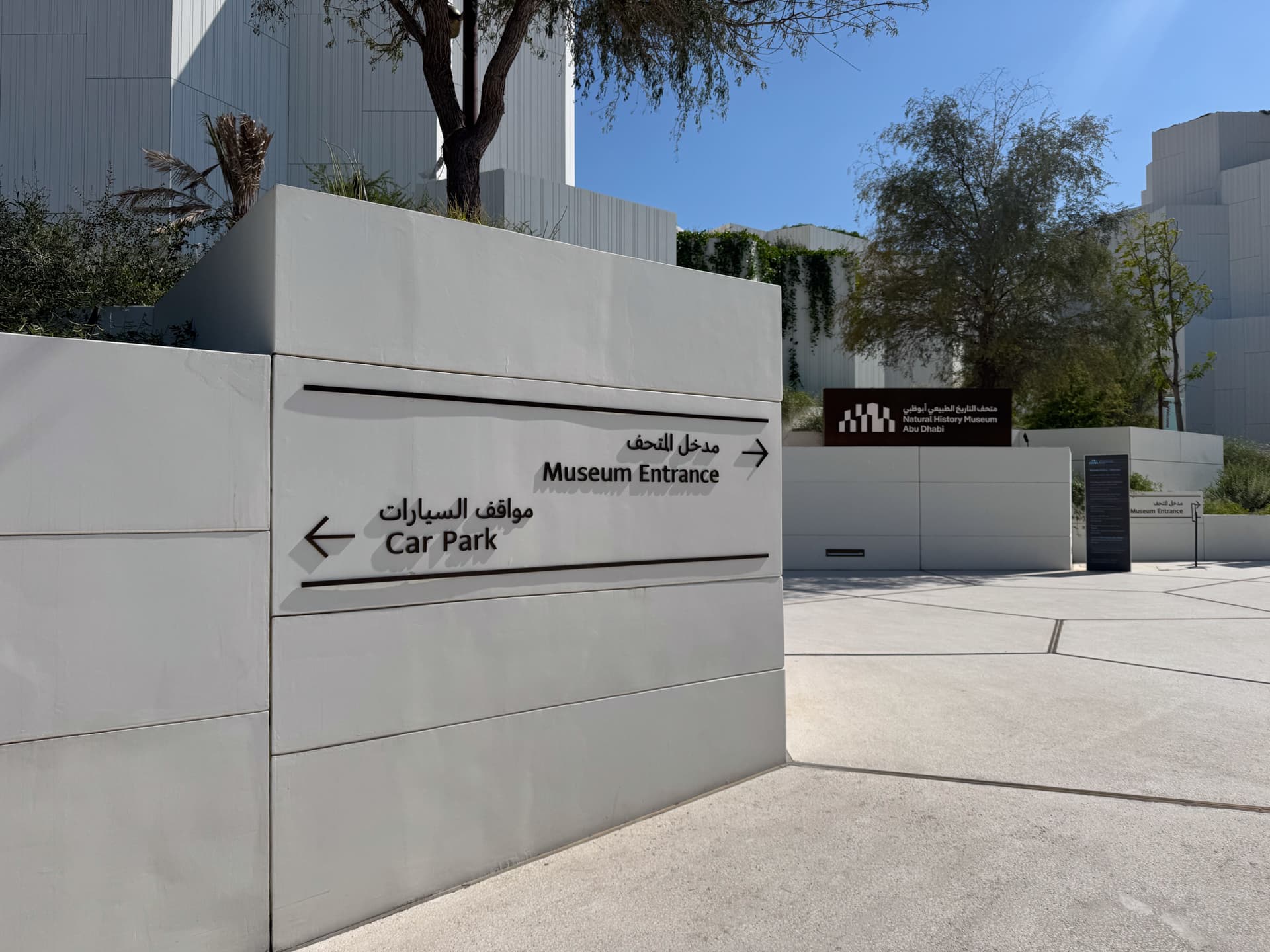
Large underground car park, free for museum visitors. Park in sections closest to the Cultural District exit to minimise the walk in the heat.
🚌
Yas Express
The free Saadiyat Shuttle links all major landmarks. If you are coming from Yas Island, this is the most comfortable option.
Frequently Asked Questions
Absolutely. The Dino Play area is brilliant for children under 6 — they can 'fly' like a Pteranodon or climb a Diplodocus treehouse.
Budget 2.5 to 3 hours for a proper visit without rushing. If you are a real science enthusiast, allow 4 hours.
Mostly no, but there is a 45kg fragment of the Moon that you are actually allowed to touch. It's a surreal, highly recommended experience.
Yes. You must book a timed slot online. The museum strictly manages visitor flow to keep the experience premium for everyone inside.
Monday–Thursday 10:00 AM – 6:30 PM; Friday–Sunday extended until 8:30 PM.
Yes. There is a large underground car park free for museum visitors. Park in sections closest to the Cultural District exit to minimise the walk in the heat.
Gallery
Explore more of what Saadiyat has to offer
← Back to EnjoyThis site contains affiliate links — if you book through our links we may earn a commission at no extra cost to you. This is an independent visitor guide, not affiliated with any governmental department.